A practical framework for modern work
The Hidden Shape
of Work
See commitments, motion, learning, and possibility before they blur together.
Most work does not fail because people are not trying. It fails because different kinds of work are treated as if they were the same. This framework gives leaders and teams a clearer way to see what is actually happening—and decide what to do next.
By Kevin August Brown
●
■
▲
◆
Four states. One clearer field.
When you can see the shape of work, you can stop managing the blur.
The model
Four states of work
The shape is not a maturity ladder. It is a field—four distinct conditions that can exist at the same time.
●
Commitments
Work that is promised, owned, and expected. Make the agreement visible before measuring progress.
■
Motion
Work actively moving through a system. Look for flow, friction, handoffs, and blocked decisions.
▲
Learning
Work that changes what you know. Protect room for tests, evidence, reflection, and changed assumptions.
◆
Possibility
Work that may become real. Explore options without pretending every possibility is already a promise.
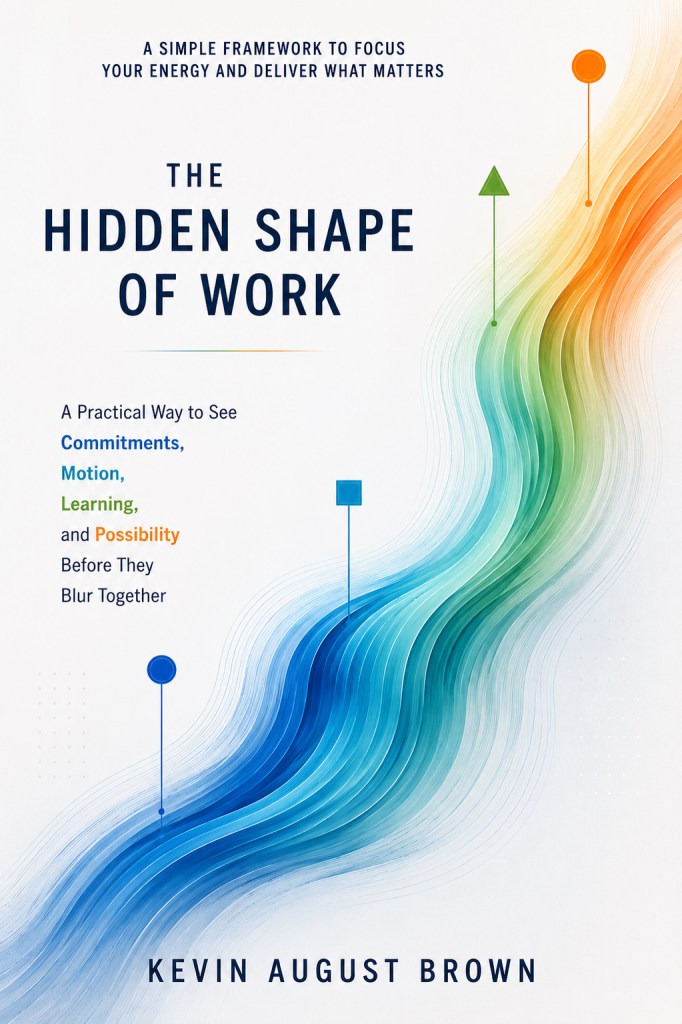
The book
A clearer way to see work
The Hidden Shape of Work is a practical guide for leaders, teams, and anyone trying to make progress in a complex system.
Separate commitments from activity, recognize learning before it is forced into a delivery plan, and keep possibilities alive without confusing them with promises.
Tools for seeing the field
Map the work
Separate what has been promised, what is moving, what is being learned, and what remains possible.
Find the friction
Make stalled decisions, overloaded handoffs, and hidden constraints visible without blaming the people inside the system.
Choose the next move
Use the state of the work—not habit or urgency alone—to decide what kind of attention it needs.
Help your team see work differently
Bring the framework into leadership sessions, team workshops, operating-model conversations, and transformation work.
●
■
▲
◆
Kevin August Brown
Kevin August Brown works at the intersection of strategy, operations, technology, and organizational change.
His focus is practical: helping leaders and teams see complex work more clearly, reduce avoidable friction, and create the conditions for meaningful progress.
What shape is your work taking?
For speaking, workshops, partnerships, or a conversation about the framework:

